AI video generation has evolved rapidly since 2024. What once felt experimental—short clips with visual glitches and unstable details—has become reliable enough for real production use.
By 2026, teams are already using AI-generated video across advertising, e-commerce, social media, education, and entertainment. As the space matures, it’s also becoming more fragmented. There are now many competing models, each with different strengths, pricing, and use cases. Choosing the wrong one can waste time and budget, while the right one can significantly speed up production.
This guide compares the major AI video generation models available through the Atlas Cloud API in 2026, covering quality, cost, speed, features, and practical fit for different workflows.
*Last Updated: February 28, 2026*
Watch these top AI video generation models in action:
The Complete Comparison Table
Here is a side-by-side overview of every AI video generation model available on Atlas Cloud in 2026:
| Model | Developer | Price/sec | Max Duration | Resolution | Audio | Speed | Best For |
| Veo 3.1 | Google DeepMind | USD0.09 | 8s | Cinematic | Yes | ~60s | Cinematic + audio |
| Wan 2.6 | Alibaba | USD0.07 | 15s | 1080p | Yes | ~20s | Fast drafts |
| Vidu Q3 | Shengshu AI | USD0.07 | 16s | 1080p | Yes | ~25s | Balanced value |
| Hailuo 2.3 | MiniMax | USD0.1 | 10s | 1080p | No | ~40s | Social media |
| Kling 3.0 | Kuaishou | USD0.153 | 10s | 1080p | Yes | ~60s | Long-form + audio |
| Sora 2 | OpenAI | USD0.1 | 10s | 1080p | No | ~90s | Cinematic realism |
| Kling Video O3 | Kuaishou | USD0.085 | 15s | 1080p | Yes | ~120s | Maximum fidelity |
All models are accessible through a single Atlas Cloud API key. No separate accounts, billing configurations, or authentication flows needed for each provider. Switch between models by changing the model ID in your request.
Rankings by Category
Best Overall: Seedance 2.0
Seedance 2.0 takes the top spot for overall best AI video generation model in 2026. The combination of motion quality, prompt adherence, and price performance is unmatched. The Fast tier at USD0.022/sec provides production-grade output at a fraction of competitor pricing, while the Pro tier delivers premium quality for hero content.
ByteDance clearly benefited from training on massive video datasets, and Seedance 2.0 demonstrates unusually strong understanding of physics, fabric dynamics, and human movement. Character consistency across frames is excellent -- people look like the same person from start to finish.
Best Visual Quality: Kling Video O3
When absolute visual fidelity matters more than cost or speed, Kling Video O3 leads the pack. Kuaishou's latest model produces video with remarkable detail in textures, lighting, and environmental elements. The model handles complex scenes with multiple subjects, reflections, and atmospheric effects with a coherence that other models still struggle to match.
The tradeoff is clear -- at USD0.15/sec and generation times of around 2 minutes, this is not a model for high-volume production. It is the model for hero content, showcase reels, and any context where quality justifies the premium.
Best Value: Seedance 2.0 Fast
At USD0.022/sec, Seedance 2.0 Fast is the clear winner for cost-conscious teams. An 8-second video costs roughly USD0.18 -- less than a quarter of what most competitors charge. The quality-to-price ratio is exceptional, making it viable for bulk generation workflows where other models would be prohibitively expensive.
Best for Audio: Veo 3.1
Veo 3.1 from Google DeepMind generates video with native audio -- dialogue, ambient sound, and music that is synchronized to the visual content. This is not a post-processing step or a separate audio model stitched on top. The audio is generated as part of the same diffusion process, resulting in natural synchronization.
For any use case where sound matters -- product demos, social media content, explainer videos -- Veo 3.1 eliminates the need for a separate audio production step. Kling 3.0 and Hailuo 2.3 also support audio, but Veo 3.1's implementation is the most polished.
Best for Anime and Stylized Content: PixVerse V4.5
PixVerse V4.5 excels at stylized, non-photorealistic content. Anime, cartoon, illustration-style videos, and artistic interpretations are where this model genuinely differentiates itself. The model handles bold color palettes, exaggerated proportions, and stylized motion in ways that photorealism-focused models simply cannot replicate.
Best for Long-Form: Kling 3.0
With support for up to 10 seconds per generation and strong temporal consistency, Kling 3.0 is the go-to choice for longer video segments. The model maintains character identity, scene coherence, and motion quality across the full 10-second window better than competitors that support similar durations.
Best for Fast Iteration: Wan 2.6
When you need results quickly -- during creative brainstorming, prompt experimentation, or rapid prototyping -- Wan 2.6 delivers. Generation times hover around 20 seconds, and at USD0.07/sec for short clips, the cost of iteration is low enough that teams can experiment freely without budget anxiety.
Individual Model Breakdowns
Seedance 2.0 (ByteDance)
ByteDance's Seedance 2.0 launched in February 2026 and immediately established itself as the most balanced AI video generation model on the market. It is the model we recommend most teams start with.
Pros:
- Exceptional price-to-quality ratio, especially at the Fast tier (USD0.022/sec)
- Strong motion quality -- human movement, fabric, and fluid dynamics look natural
- Excellent prompt adherence -- the model generates what you describe
- Reliable character consistency across frames
- Two tiers (Fast and Pro) allow teams to optimize cost vs. quality per use case
Cons:
- Maximum 8-second clips -- no 10-second option
- No native audio generation
- Pro tier is expensive (USD0.247/sec) relative to competitors at the premium end
- 1080p maximum resolution -- no 4K option
Best for: Production teams that need reliable, affordable video generation at scale. The Fast tier handles 80% of use cases, with Pro reserved for premium content.
Kling 3.0 (Kuaishou)
Kling 3.0 is Kuaishou's flagship video generation model and a strong all-around performer. The model supports up to 10-second clips with native audio, making it one of the most feature-complete options available.
Pros:
- 10-second maximum duration -- longest alongside Sora 2 and Kling Video O3
- Native audio generation with reasonable synchronization
- Good motion quality and scene coherence
- Strong performance on product and commercial video content
- Solid prompt understanding for complex scene descriptions
Cons:
- USD0.126/sec puts it in the mid-to-upper price range
- Generation times around 60 seconds are moderate
- Audio quality is functional but not as refined as Veo 3.1
- Occasional artifacts in complex hand and finger movements
Best for: Teams that need longer video clips with audio. Commercial product videos, social media content, and marketing assets where duration and sound both matter.
Kling Video O3 (Kuaishou)
Kling Video O3 represents Kuaishou's quality-first offering. It sacrifices speed and cost efficiency for the highest visual fidelity in the Kling family.
Pros:
- Outstanding visual quality -- among the best available in 2026
- 10-second clips with native audio
- Exceptional detail in textures, lighting, and environmental rendering
- Strong temporal consistency even in complex scenes
Cons:
- USD0.15/sec is at the premium end of the market
- Generation times of approximately 2 minutes are the slowest in this comparison
- Not suitable for high-volume production due to cost and speed
- Marginal quality improvement over Kling 3.0 may not justify the price difference for all use cases
Best for: Hero content, showcase reels, client-facing deliverables, and any context where visual quality is the primary selection criterion.
Veo 3.1 (Google DeepMind)
Veo 3.1 is Google DeepMind's entry into the AI video generation market, and it brings a unique advantage -- cinematic quality that rivals real footage and integrated audio generation.
Pros:
- Cinematic output that looks like real footage with exceptional visual polish
- Native audio generation with the best synchronization quality available
- Strong cinematic quality -- lighting, depth of field, and color grading are excellent
- USD0.03/sec is remarkably affordable for the quality level
Cons:
- Maximum 8-second clip duration
- Generation times around 60 seconds
- Occasional inconsistencies in rapid motion sequences
- Newer model with a smaller community and fewer prompt guides available
Best for: Cinematic content, HD productions, and any use case where integrated audio eliminates a production step.
Sora 2 (OpenAI)
OpenAI's Sora 2 was one of the most anticipated AI video models, and it delivers strong cinematic quality with a particular strength in narrative coherence.
Pros:
- Excellent understanding of narrative and story-driven prompts
- Strong cinematic quality -- camera movement, framing, and composition feel intentional
- 10-second maximum duration
- Good prompt adherence for complex, multi-element scenes
Cons:
- USD0.15/sec places it at the premium end alongside Kling Video O3
- No native audio generation
- Generation times around 90 seconds
- Availability has been inconsistent, with occasional capacity constraints
Best for: Narrative and story-driven content, cinematic sequences, and creative projects where the "director's eye" quality of the model's framing and composition adds value.
Wan 2.6 (Alibaba)
Alibaba's Wan 2.6 prioritizes speed and affordability over maximum quality. It is the fastest model in this comparison and one of the cheapest.
Pros:
- Fastest generation time -- approximately 20 seconds
- USD0.07/sec is budget-friendly
- Good enough quality for drafts, storyboards, and rapid iteration
- Reliable and consistent output quality
Cons:
- 720p maximum resolution is the lowest in this comparison
- 5-second maximum duration limits use cases
- No native audio
- Visual quality is noticeably below premium models in side-by-side comparison
Best for: Rapid prototyping, creative brainstorming, storyboarding, and any workflow where speed and cost matter more than maximum visual fidelity. Also suitable for social media stories and short-form content where 720p is acceptable.
Hailuo 2.3 (MiniMax)
MiniMax's Hailuo 2.3 occupies a middle ground -- decent quality, reasonable pricing, and native audio support.
Pros:
- Native audio generation
- USD0.08/sec is competitively priced
- Good motion quality for human subjects
- Solid performance on social media content formats
Cons:
- 6-second maximum duration is somewhat limiting
- 1080p resolution is standard but not exceptional
- Audio quality is behind Veo 3.1
- Less consistent than Seedance 2.0 or Kling 3.0 on complex prompts
Best for: Social media content creation where audio adds value. The price-to-feature ratio is attractive for teams that need sound without paying Veo 3.1 or Kling 3.0 prices.
Vidu Q3 (Shengshu AI)
Shengshu AI's Vidu Q3 offers solid value at USD0.07/sec with 12-second clips at 1080p -- a combination that undercuts most competitors on a per-second basis.
Pros:
- USD0.07/sec with 12-second clips -- good value for the duration
- 1080p resolution
- Native audio generation
- Decent motion quality and prompt adherence
- Fast generation times around 25 seconds
Cons:
- Quality falls below the top tier (Seedance 2.0, Kling 3.0, Veo 3.1) on detailed scenes
- Smaller user community means fewer prompt engineering resources
- Occasional flickering artifacts in high-motion scenes
Best for: Teams looking for affordable 1080p video generation with native audio without the resolution compromise of Wan 2.6. A balanced option for mid-volume production workflows.
Luma Ray 3 (Luma AI)
Luma AI's Ray 3 is a capable mid-range model with fast generation times and solid quality.
Pros:
- Fast generation (~30 seconds)
- Good quality-to-speed ratio
- Clean, artifact-free output on most prompts
- Strong performance on product and object-focused content
Cons:
- 5-second maximum duration is limiting
- USD0.10/sec is mid-range pricing
- No native audio
- Less distinctive -- does not clearly lead any specific category
Best for: Quick iteration cycles and product-focused content. A reliable default for teams that prioritize generation speed alongside reasonable quality.
PixVerse V4.5 (PixVerse)
PixVerse V4.5 differentiates itself through strong performance on stylized, non-photorealistic content.
Pros:
- Excellent anime and stylized video generation
- 8-second clips at 1080p
- Handles bold color palettes and exaggerated motion well
- Good prompt adherence for artistic descriptions
Cons:
- USD0.09/sec is mid-range
- Photorealistic content is weaker compared to Seedance, Kling, or Veo
- No native audio
- Somewhat niche -- the stylized strength is less relevant for commercial use cases
Best for: Anime, cartoon, illustration-style video content. Creative projects, gaming assets, and entertainment content where non-photorealistic styles are the goal.
How to Access All Models Through Atlas Cloud
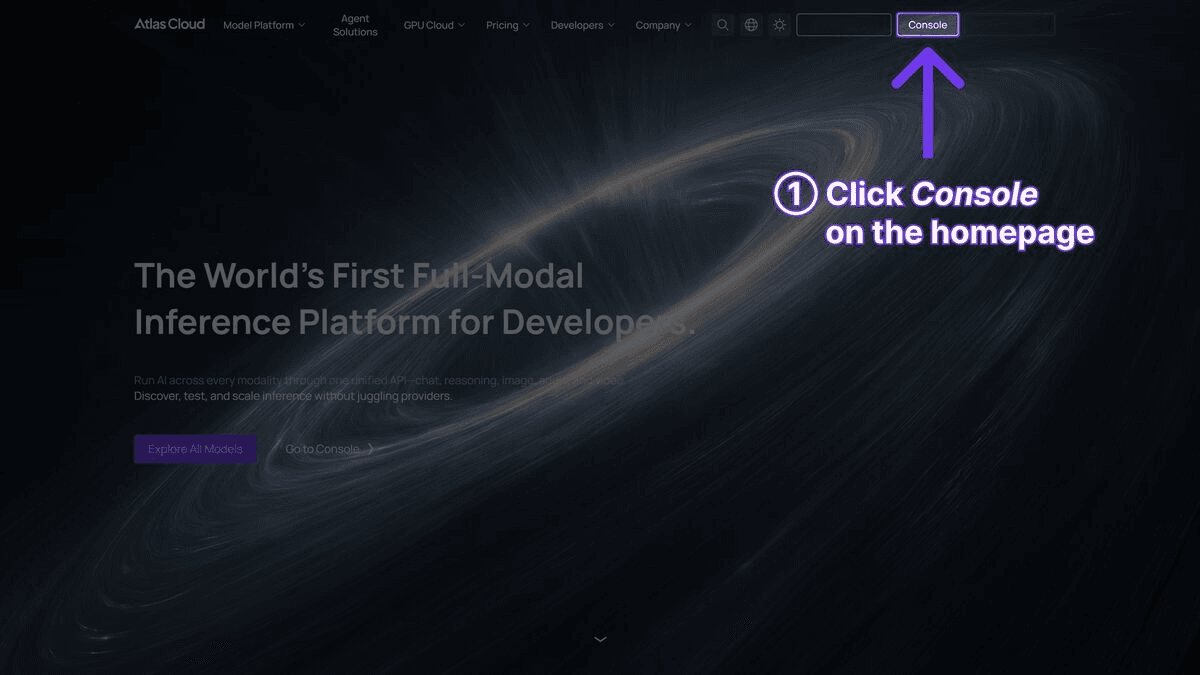
All ten models listed in this comparison are available through a single Atlas Cloud API. Here is how to get started.
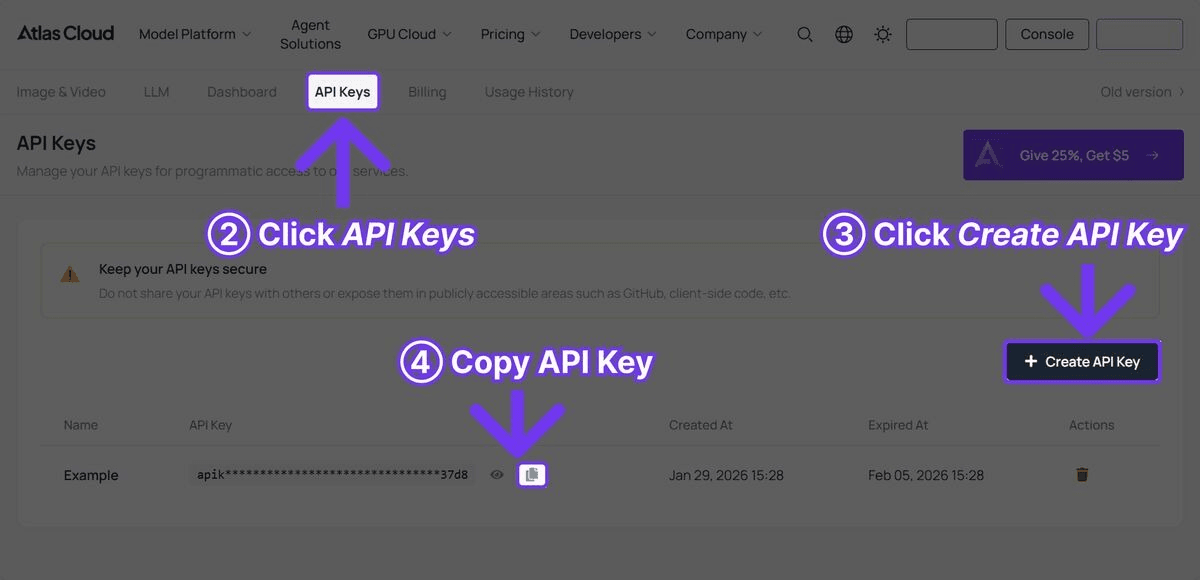
Step 1: Create Your API Key
Sign up at Atlas Cloud and create an API key from the dashboard. New accounts receive a USD1 free credit to test any model.


Step 2: Generate a Video
Here is a Python example using Seedance 2.0 Fast. Swap the model ID to use any other model.
plaintext1```python 2import requests 3import time 4 5 6API_KEY = "your_api_key_here" 7BASE_URL = "https://api.atlascloud.ai/api/v1" 8 9 10# Step 1: Submit generation request 11response = requests.post( 12 f"{BASE_URL}/model/prediction", 13 headers={"Authorization": f"Bearer {API_KEY}"}, 14 json={ 15 "model": "bytedance/seedance-v2.0-pro/text-to-video", 16 "input": { 17 "prompt": "A golden retriever running through a meadow at sunset, slow motion, cinematic lighting", 18 "duration": 5, 19 "seed": 42 20 } 21 } 22) 23request_id = response.json()["request_id"] 24 25 26# Step 2: Poll for results 27while True: 28 result = requests.get( 29 f"{BASE_URL}/model/prediction/{request_id}/get", 30 headers={"Authorization": f"Bearer {API_KEY}"} 31 ) 32 data = result.json() 33 if data["status"] == "completed": 34 print(f"Video URL: {data['output']['video_url']}") 35 break 36 elif data["status"] == "failed": 37 print(f"Error: {data['error']}") 38 break 39 time.sleep(5) 40```
To use a different model, replace the model ID. For example:
- Kling 3.0: `"kwaivgi/kling-v3.0-pro/text-to-video"`
- Veo 3.1: `"google/veo3.1/text-to-video"`
- Sora 2: `"openai/sora-2/text-to-video"`
- Wan 2.6: `"alibaba/wan-2.6/text-to-video"`
Step 3: Compare Models
The most effective approach is to run the same prompt across 2-3 models and compare results. Atlas Cloud's unified API makes this straightforward -- same authentication, same request format, same polling mechanism. Only the model ID changes.
plaintext1```python 2models = [ 3 "bytedance/seedance-v1.5-pro/text-to-video", 4 "kwaivgi/kling-v3.0-pro/text-to-video", 5 "google/veo3.1/text-to-video" 6] 7 8 9prompt = "A ceramic coffee cup on a wooden table, steam rising, morning light through a window" 10 11 12for model in models: 13 response = requests.post( 14 f"{BASE_URL}/model/prediction", 15 headers={"Authorization": f"Bearer {API_KEY}"}, 16 json={ 17 "model": model, 18 "input": { 19 "prompt": prompt, 20 "duration": 5 21 } 22 } 23 ) 24 print(f"{model}: {response.json()['request_id']}") 25```
Decision Framework: Which Model Should You Choose?
Use this framework to narrow your selection:
If budget is your primary constraint: Start with Seedance 2.0 Fast (USD0.022/sec). It provides the best quality-to-cost ratio and handles most use cases competently.
If you need audio: Veo 3.1 has the best audio implementation. Kling 3.0 and Hailuo 2.3 are alternatives if you need longer clips or lower cost.
If visual quality is everything: Kling Video O3 for maximum fidelity, or Veo 3.1 for cinematic quality. Both are premium-priced, so reserve them for hero content.
If speed matters most: Wan 2.6 generates in approximately 20 seconds. Vidu Q3 and Luma Ray 3 are also fast options with better resolution.
If you need 10-second clips: Your options are Kling 3.0, Kling Video O3, and Sora 2. Kling 3.0 offers the best balance of these three.
If you are making anime or stylized content: PixVerse V4.5 is the specialist. No other model in this comparison handles non-photorealistic styles as well.
If you are unsure: Start with Seedance 2.0 Fast. It is the safest default -- affordable, high-quality, and capable across a wide range of content types. You can always switch to a specialized model once you have identified specific needs.
Frequently Asked Questions
Which AI video generation model has the best quality in 2026?
Kling Video O3 produces the highest visual fidelity, but Veo 3.1 leads for cinematic polish and integrated audio. For most production workflows, Seedance 2.0 Fast delivers quality that is more than sufficient at a fraction of the cost.
Can I use multiple AI video models through one API?
Yes. Atlas Cloud provides access to all models listed in this guide through a single API key. You switch between models by changing the model ID parameter in your request -- no separate accounts or billing needed.
How much does AI video generation cost per minute of content?
Costs vary significantly by model. At the cheapest end, Seedance 2.0 Fast produces one minute of 8-second clips for approximately USD1.32. At the premium end, Kling Video O3 costs approximately USD9.00 per minute. Most teams use a mix of models to balance cost and quality.
Do any AI video models generate audio with the video?
Yes. Veo 3.1, Kling 3.0, Hailuo 2.3, and Kling Video O3 all generate native audio alongside the video output. Veo 3.1 has the best audio quality and synchronization, while Kling 3.0 supports multilingual dialogue with lip sync.
Final Verdict
The AI video generation landscape in 2026 is mature enough that there is no single "best" model. The right choice depends on your specific constraints -- budget, quality requirements, duration needs, audio requirements, and content style.
That said, if forced to recommend a single starting point, Seedance 2.0 Fast is the answer for most teams. At USD0.022/sec, the barrier to experimentation is minimal, and the quality is genuinely production-ready for the majority of commercial use cases.
For teams with premium quality requirements, Veo 3.1 and Kling Video O3 represent the current quality ceiling, each with distinct advantages -- Veo for cinematic quality and audio, Kling O3 for raw visual fidelity.
The practical advantage of Atlas Cloud is that you do not need to commit to a single model upfront. All ten models use the same API, the same authentication, and the same billing. Start with one, compare against others, and build a multi-model pipeline that uses the right tool for each specific use case.
Start generating videos with all 10 models -- USD1 free credit